Compact Wireless Device for EEG measurements
homeEEG is a compact, wireless 10/20-channel EEG recorder that lets patients, including young children, have an EEG test at home. EMBIQ delivered it for enQuant as part of the QNeuro system for people with epilepsy: the recorder and its firmware, the mobile app, and the home video-EEG stations, from prototype to production batch.
Technologies used
STM32 firmware, Bluetooth, Wi-Fi, serial interface, Android, Linux
Tools
STM32 microcontroller, memory card with FAT file system, mini PC, video cameras, EMC and electrical safety testing
5
Project members
30 months
Project length
IoT, Embedded Software, Mobile App Development
Category
Healthcare industry
Branch
The challenge
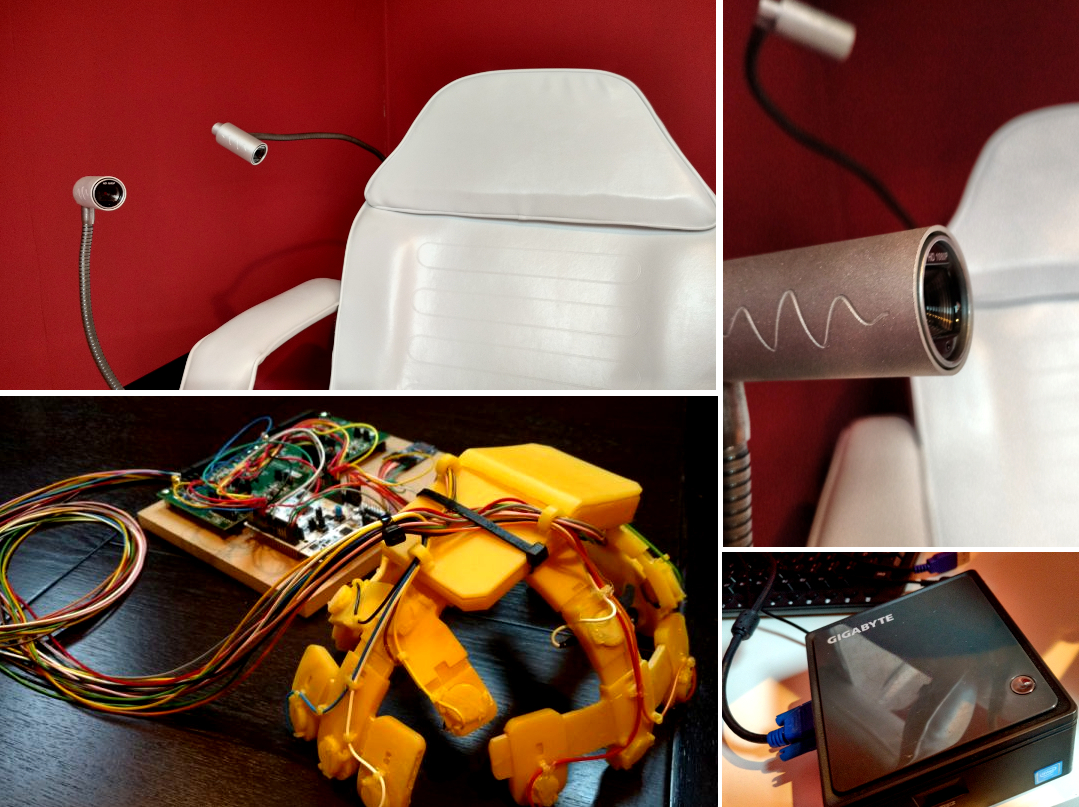
enQuant, an IT company from Toruń, was building QNeuro, a system for diagnosing and monitoring people with epilepsy. One part of it was an EEG test that patients could do at home. For a child, a test at home is far less stressful than one in an unfamiliar clinic, but it needs equipment that a family can use and that still records a clean signal. enQuant needed homeEEG, a small, light, wireless 10/20-channel recorder with a dedicated electrode helmet, and homeVEEG, a home video-EEG station: a chair with two cameras that records video together with the EEG. EMBIQ was responsible for taking the recorder from prototype to a production batch. The firmware had to acquire signals from the EEG channels and the other sensors, save them to a memory card, log errors, run self-diagnostics and accept software updates in the field. The same device had to talk to a mobile app over Bluetooth, to the video station over Wi-Fi and to a computer over a serial link, using one communication protocol. The hardware also had to go through electromagnetic compatibility and electrical safety tests.
Thanks to its small size and low weight, it allows for broad application, and the technical parameters ensure the high quality of the recorded signal.
Key Features
- Firmware for the STM32-based recorder: EEG and sensor acquisition, recording to a memory card, error logging and self-diagnostics
- One documented communication protocol for Bluetooth, Wi-Fi and serial connections, shared by the recorder, the app and the video station
- Remote firmware updates for devices already in use
- Mobile app that works as a remote control: start and stop a test, browse and download results, and clear the device memory
- Four ways of working: with the mobile app, through the video station, through a tablet acting as a Wi-Fi hotspot, or as a stand-alone recorder with a START/STOP button
- Video-EEG station software on a Linux mini PC that records two cameras alongside the EEG, uploads the data to the client's server and sends video frames to the mobile app
- Enclosure, electrode mounting system, injection moulds, transport packaging and user manual
.png)
The result
The work was split into stages, and enQuant formally accepted each milestone: the prototype with its EMC and electrical safety tests, the enclosure and electrode mount designs, the firmware and communication protocol tests, and a model video-EEG station. The final acceptance, in July 2019, covered the trial batch, the electrode mounting system, the enclosure and its moulds, the user manual and packaging, the target batch of recorders and the video-EEG stations with their chairs. No defects were recorded. In its public review on Clutch, enQuant wrote that the EMBIQ team shared its knowledge, brought ideas of its own and proposed alternative solutions, and that there was nothing it would change.
- Recorder taken from prototype to a production batch
- EMC and electrical safety testing completed on the prototype
- Firmware, mobile app and video station working over one protocol
- Final acceptance in July 2019 with no defects recorded
The application enables recording images from two cameras connected to the computer and recording signals from the homeEEG device. These signals are transmitted via WiFi/Bluetooth network or serial interface.
What kind of competencies are you looking for?
Contact me to discuss your requirements and build your dedicated IT team together with us.

Agnes
business development specialist
Get a quote or advice

Let’s investigate your project concept and its current status together.

Expect an initial project scope proposal, time and cost estimation from us.

The consultancy will be protected by the NDA.