
Connecting Medical Devices to Hospital Systems over BLE and HL7
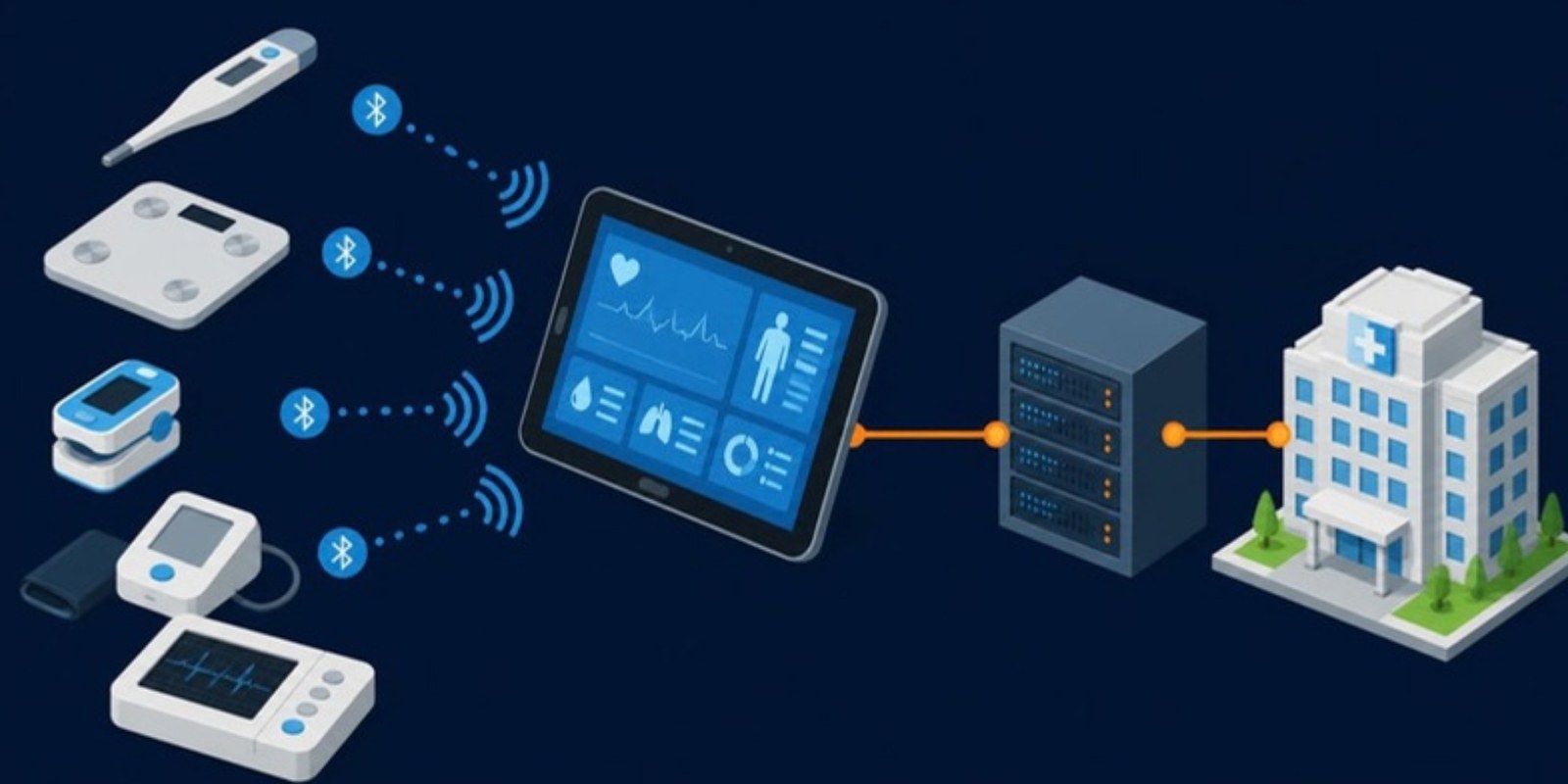
A tablet app and a local server for a mobile telemedicine kit. The app reads patient measurements from Bluetooth medical devices, links them to the right patient and order, and exchanges data with the hospital information system over HL7.
Technologies used
React Native, Kotlin, Bluetooth Low Energy, HL7 v2, Python, Django REST Framework, PostgreSQL, Celery, Redis, Nginx, Active Directory
Tools
Jira, Figma, GitHub, GitHub Codespaces
11
Project members
13 months
Project length
Integrations, Custom Software Development
Category
Healthcare
Branch
The challenge
Our client, a medtech company, was building a mobile telemedicine kit for hospitals: a tablet and a set of medical devices that nurses bring to the patient's bed. The kit included vital-signs devices, such as thermometers, scales, blood-pressure monitors and pulse oximeters, as well as point-of-care meters and an ECG device. An earlier approach had not worked well, and the client wanted a solution that connects the devices properly and places every measurement in the hospital's own system. Every device talks Bluetooth Low Energy in its own way, and the ECG device exchanges data in HL7. In a ward, several devices can be switched on at once, and a single measurement must never land in the wrong patient's record. The hospital side added more requirements: staff log in with their hospital accounts, tablets are shared and have to be registered, and patient lists, orders and results have to go both ways between the kit and the hospital information system.
Before we wrote any production code, we tested each device and wrote down how it talks, when it disconnects and what it sends back. That design stage, with the architecture, data model, API and HL7 flows on paper, is what let us build the rest without surprises.

Key Features
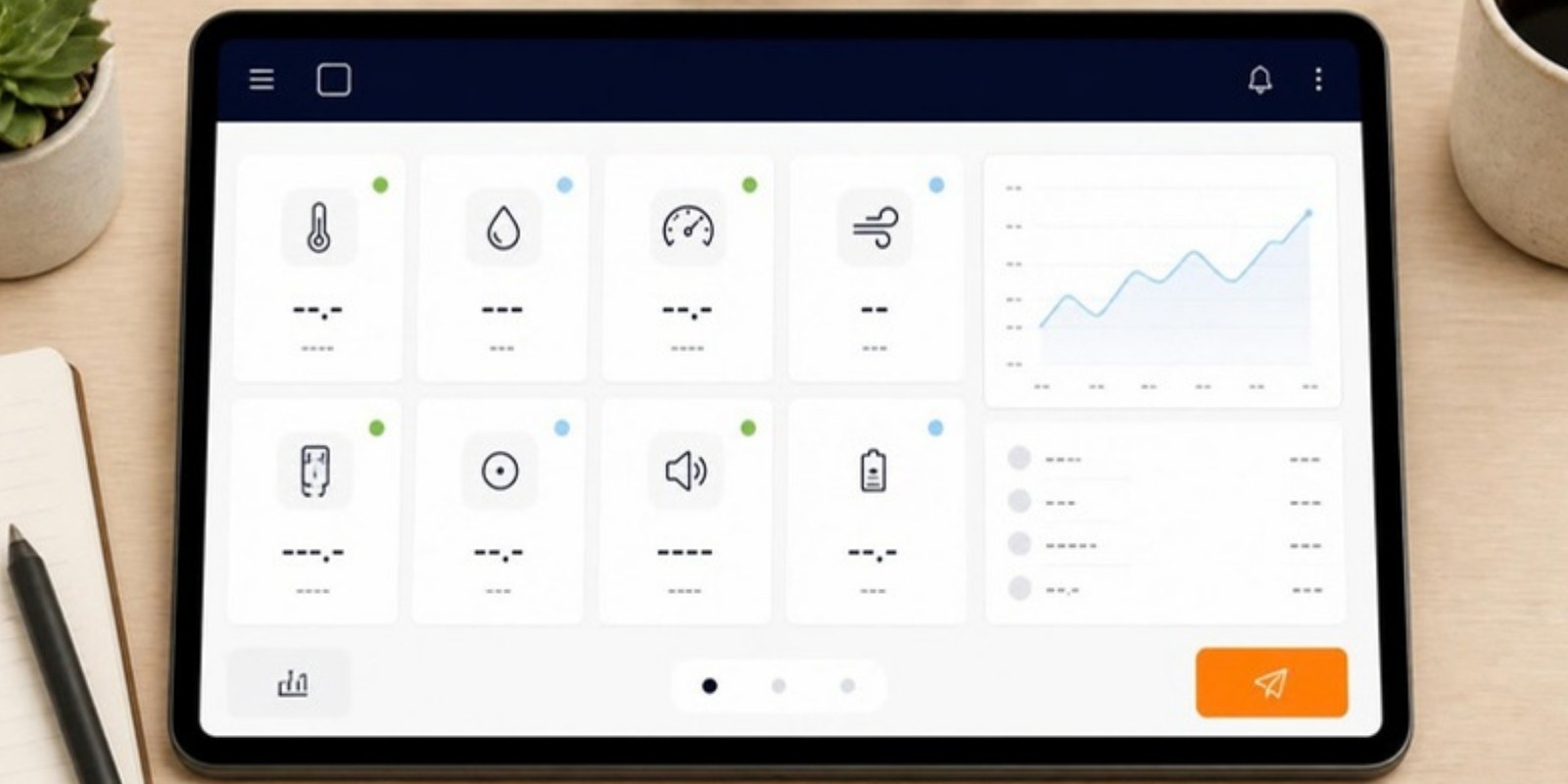
- Android tablet app in React Native with a native Kotlin module for Bluetooth Low Energy communication
- Parallel handling of several devices, live connection status, and controlled scanning and disconnection after each measurement
- Guided ECG flow with an on-screen tutorial and the result stored as a PDF
- Patient search and worklists taken from the hospital information system
- Results and PDF reports sent back to the hospital system as HL7 messages through a background queue
- Local server with an admin panel for tablet registration, device management and measurement history
- Login with hospital directory accounts, temporary passwords and a demo mode for presentations
The result
We ran the project in two stages. In the design stage we analysed the devices, prepared the architecture, data model, API documentation and HL7 flows, and turned the requirements into UX mock-ups and a clickable prototype. In the implementation stage we built the tablet app, the local server and the integration with the hospital information system. We worked in weekly sprints and showed the client a demo after every sprint. The client now has a complete, demonstrable kit. A nurse picks a patient from the hospital list, takes the measurements with the connected devices, and the results appear in the hospital system against the right patient and order, with no retyping. After the main build we stayed on for smaller fixes and improvements.
- One tablet app working with many types of Bluetooth medical devices
- Two-way HL7 exchange: patients and orders in, results and reports out
- No manual retyping of measurements into the hospital system
- Hospital-grade access control with directory logins and registered tablets
- Full design documentation handed over together with the source code
Medical devices are the easy part to demo and the hard part to make reliable. The value here is the whole chain: the device, the tablet, the local server and the hospital system, with each measurement ending up in the right record.

What kind of competencies are you looking for?
Contact me to discuss your requirements and build your dedicated IT team together with us.

Agnes
business development specialist
Get a quote or advice

Let’s investigate your project concept and its current status together.

Expect an initial project scope proposal, time and cost estimation from us.

The consultancy will be protected by the NDA.