
October 15, 2026
Can AI work inside your existing ERP and CRM?
In this article:
The short answer: yes, in most casesHow AI connects to an existing ERP or CRMWhere AI fits firstAn example: a voicebot that writes into the existing CRMWhat to watch out forWhy integration experience matters more than the modelHow we startMany companies hear about AI and assume it starts with a new system: a CRM with AI built in, a new ERP module, a new platform for everyone to learn. For most of them that would be expensive, slow and unnecessary. The systems they already have hold the data, the processes and the habits of the team. The real question is not which system to replace, but where AI can work alongside the ones you have.
The short answer: yes, in most cases
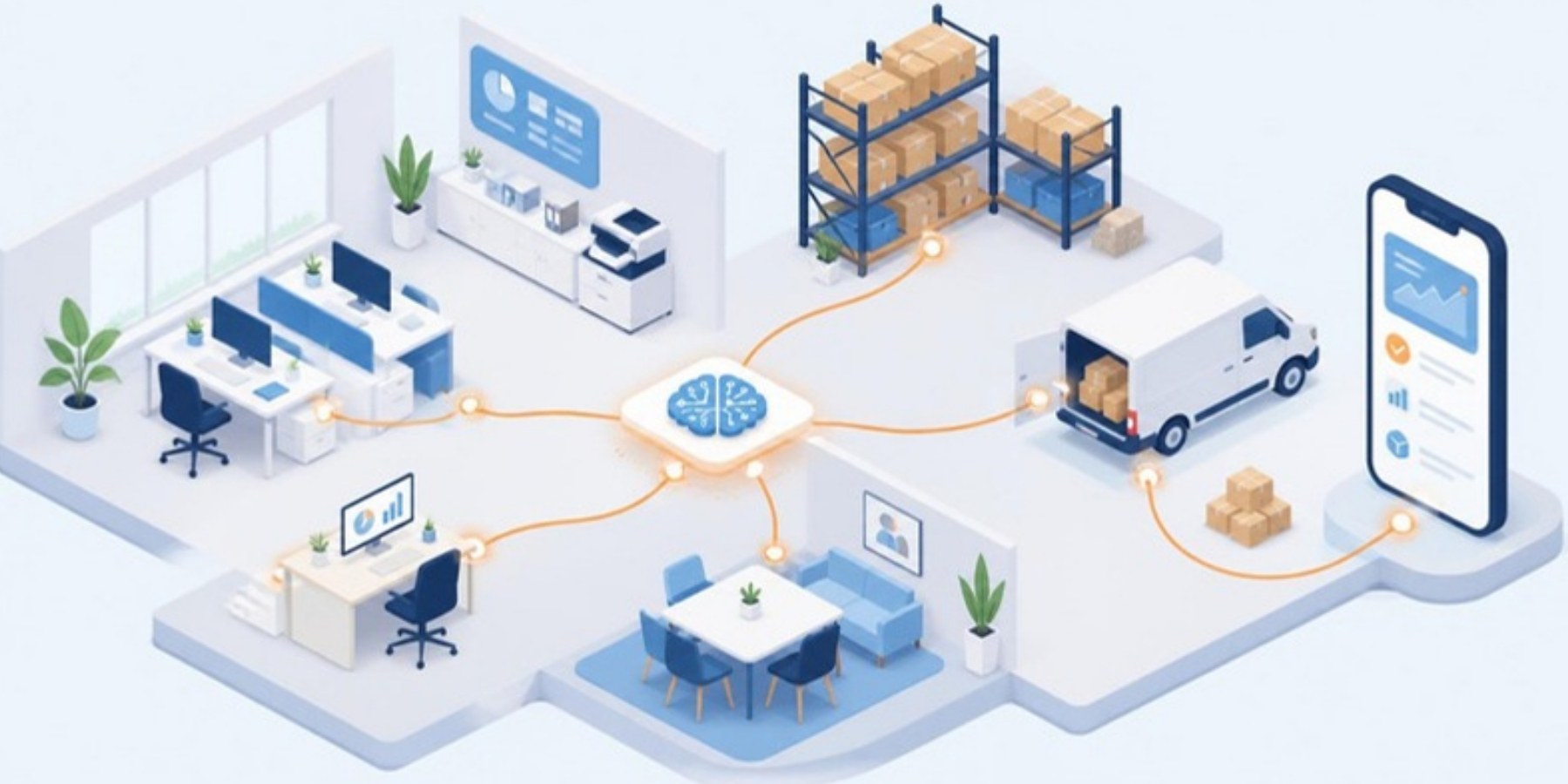
In most cases AI does not need a new ERP or CRM. It works as a layer on top of the systems you already use: it reads data from them, does one well-defined task and writes the result back where your team already looks. The ERP stays the record of orders and stock, the CRM stays the record of customers and enquiries, and people keep working in the tools they know.
Most of the time there is no need to build AI from scratch. It is enough to connect the systems, SaaS tools and AI components a company already has in a smart way. That is also the common advice across the industry: treat AI as an addition to existing systems, not as a reason to replace them.
How AI connects to an existing ERP or CRM
Technically, the connection is usually less exotic than it sounds. Most ERP and CRM systems offer an API, webhooks or at least import and export. An AI integration then has three parts:
- A trigger. Something happens in a system: a new enquiry in the CRM, a new order, an incoming invoice, a question from a customer.
- An AI step. A language model, a speech model or a document reader does one job: it reads, summarises, classifies, drafts or answers.
- A write-back. The result goes back to the system of record as a field, a note, a draft or a task for a person.
Between them sits an automation layer that moves data reliably, handles errors and keeps a log. In the voicebot project described below, that layer was built with n8n, webhooks and a CRM integration. The AI model is one component; most of the work is making systems talk to each other reliably.
Where AI fits first
The best first tasks are repetitive, well defined and close to data that already sits in your systems. The ones we see most often:
- Enquiry callbacks. A voicebot calls new enquiries back and writes a summary into the CRM.
- B2B quotes. Offers drafted from the product catalogue and price lists in minutes, not days.
- Incoming invoices. Data read from invoices, orders and forms and passed to the ERP instead of being retyped.
- Order questions. An assistant connected to the ERP answers customers 24/7 with real order and stock data.
- Internal questions. An assistant answers based on company documents, procedures and product knowledge.
- Data between systems. Data that someone moves by hand between the ERP, the CRM and other tools.
Every one of these keeps the existing system in charge. AI prepares, the system stores, and a person decides where it matters.
An example: a voicebot that writes into the existing CRM
In one of our public case studies, a company received a steady stream of enquiries through online forms and could not call everyone back quickly, especially after office hours. The goal was to automate the first call and nothing more, inside the process and the CRM the team already used, without a new tool to learn.
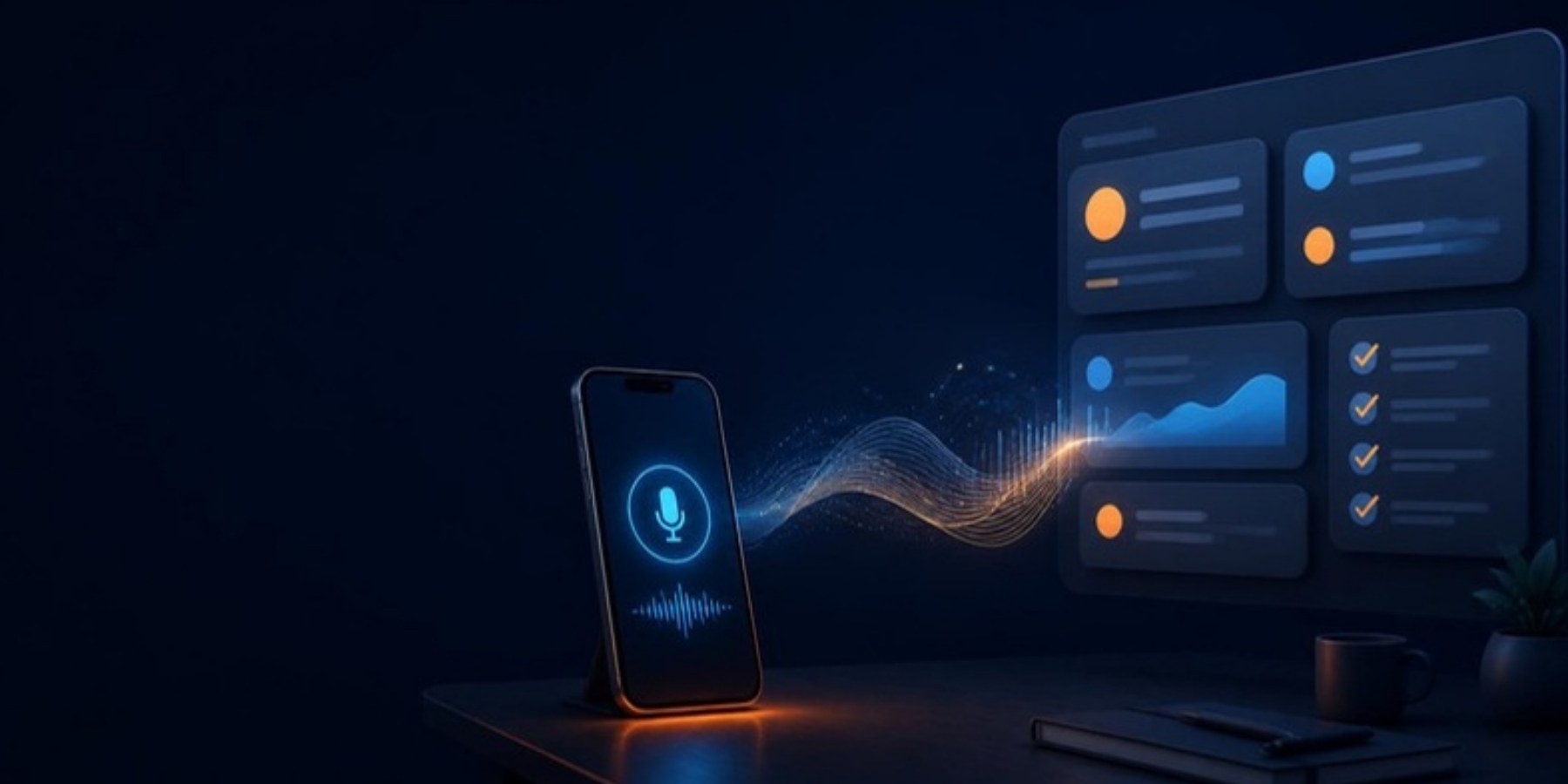
We built an AI voicebot that calls every new enquiry back immediately. An automation passes each enquiry to the CRM with its context: the offer and its language. The bot calls, confirms the details, answers basic questions and says what happens next. A summary of the call goes back to the CRM record, and a team member gets a follow-up task. The CRM stays the record; on the voice platform, recordings and transcripts are kept only for a short operational window.
The stack was ordinary on purpose: voice AI, n8n, the CRM integration, webhooks and SIP telephony. A team of three built it in two months. What surprised us was how much of the quality came from the process rather than from the model: clean data in the form, fewer questions, a short call and a clear handover. There is more in our article about the voicebot as the first line.
We have done the same inside our own company. Our internal matching assistant connects a language model to the profile generator we already used, collects requests from several channels in one place and brings suggestions to the sales team through a Slack bot. The language model only ever sees profiles that have already been anonymised.
What to watch out for
- Data quality. AI is only as good as the context it receives. In the voicebot project, some forms sent incomplete details to the CRM. We fixed the forms, not the bot.
- One job per step. A narrow task with a clear handover to a person works better than an assistant that tries to do everything.
- The system of record. Decide up front where the result lives. In the voicebot project it was the CRM, not the voice platform.
- Personal data and the AI Act. Almost every integration touches data about clients or employees. We design with GDPR and the EU AI Act in mind from the first workshop: personal data processed only where it is needed, clear information for people who talk to a bot and human oversight over decisions that matter.
- Measurement. Every automation should have a target effect agreed up front, checked after launch.
Why integration experience matters more than the model
The models are good enough and widely available. The bottleneck is the process around them and the integration with the systems a company already uses. We have been building and integrating systems for well over a decade: apps, backends, devices, integrations with ERP and CRM systems. That is the experience AI inside existing systems needs, because most of the work is the connection, not the model.
How we start
We start with the process, not with a model or a vendor. In an AI Process Review our analyst visits your company, talks to the people who do the work and looks, among other things, at where data is moved by hand between your ERP, CRM and other tools. A review usually takes from one day to a week. You get a map of your key processes, a list of the places where AI pays back fastest, an estimate of the effect in hours and money and a recommended first step.
From there, as part of AI process automation, we design the integrations with your systems, implement the automations and maintain them. Our offices are in Lublin and Graz: see AI automation in Austria or AI automation in Poland.
If you would like to see where AI could work inside your ERP or CRM, start with an AI process review or book a conversation with us.

Get a quote or advice

Let’s investigate your project concept and its current status together.

Expect an initial project scope proposal, time and cost estimation from us.

The consultancy will be protected by the NDA.